

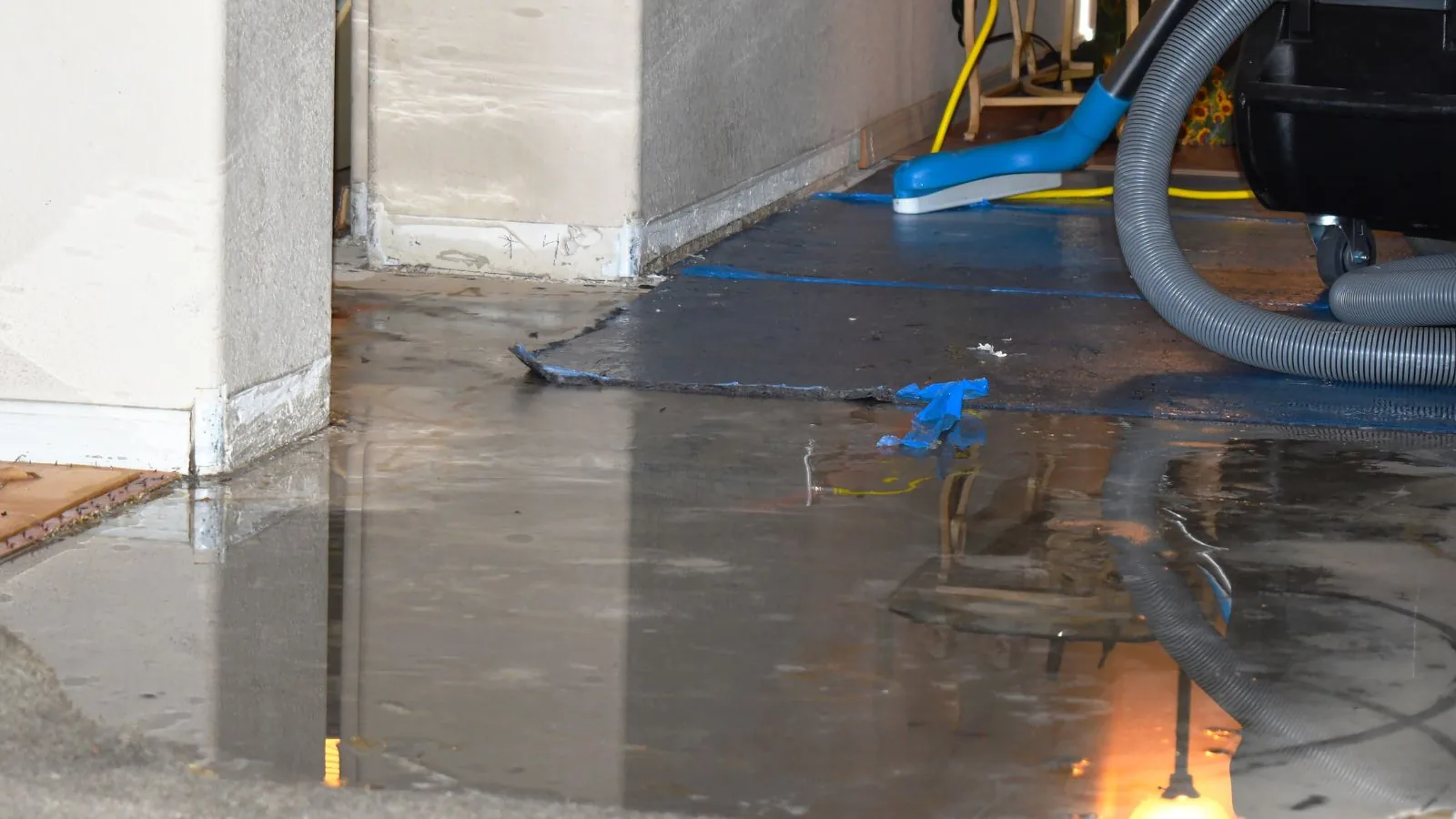
What water extraction means
Water extraction is the physical removal of liquid water from a building. It is the first stage of any wet loss and it happens before anything is dried. Extraction removes the bulk of the water so that drying equipment is not forced to evaporate gallons that a pump could have lifted out in minutes.
In a Beaverton home the water usually comes from a failed supply line, an overflowing fixture, a washing machine hose or storm runoff that found a way inside. The source differs but the first move is the same. Stop the water at the source if you can, then get the standing water out of the structure.
When standing water is an emergency
Water that covers the floor of a room and is still rising or spreading needs action now. Water that has sat for a night is already soaking into baseboards and subfloor. Call at any hour, including late at night and on weekends, and say how deep the water is.
If the water is near a panel, outlets, cords or a gas appliance, stay out. Call your electric or gas utility or 911 before you call us. Cut power to the area only if you can reach the panel without stepping in water.
Water still spreading?
The dispatch line answers 24 hours a day. Call and describe what you see.
The equipment used to remove standing water
Depth decides the tool. Water above an inch or two on a hard floor is lifted with a submersible pump and hose that discharges outdoors away from the foundation. Shallower water and water held in carpet is pulled with truck-mounted or portable extraction units that use strong vacuum and a wand.
Carpet and pad hold far more water than they appear to. A floor that looks damp can still carry a full gallon in every few square feet of padding. Extraction wands are worked slowly in overlapping passes so that the pad releases its water instead of just the surface fibers.
Submersible pumps
Used when water is deep enough to cover the pump intake. They empty a room quickly and leave only a thin film.
Portable extractors
Used on carpet, pad and tight spaces such as closets and stairs where a hose cannot reach.
Wet vacuums and squeegees
Used on tile, vinyl and sealed concrete to clear the last film and the water trapped along baseboards.
The first hour while you wait for the crew
There are a few safe things to do before help arrives. None of them replace the extraction, but they stop the loss from growing.
- Step 1
Stop the source
Close the shut-off valve at the fixture or the main valve for the house. If you cannot reach it safely, call the line and say so.
- Step 2
Protect the electrical
Do not walk through standing water if outlets, cords or panels are near it. Switch off power to the affected area only if the breaker panel is dry and you can reach it without stepping in water.
- Step 3
Lift what you can
Move small furniture, rugs, electronics and paper off the wet floor. Place foil or plastic under furniture legs that stay behind.
- Step 4
Photograph everything
Take wide and close photos of the water level, the source and the damaged items before anything is moved. Insurers ask for them.
Why removal comes before drying
Wood, drywall and insulation absorb water the moment they touch it. Extraction cuts the time they stay saturated. Under industry practice described in ANSI/IICRC S500, the drying plan is built after the standing water is gone, because the remaining moisture in materials is what the plan has to remove.
After extraction the crew checks moisture in the floor, baseboards and the lower wall with meters and a thermal camera. Those readings show where water went that the eye cannot see. If readings stay high, the job moves into structural drying and dehumidification, which uses air movers and dehumidifiers to pull the rest out of the structure.
Water categories change the plan
Not all standing water is treated the same. The source tells the crew how much protective gear is needed and which materials must be removed instead of dried.
| Water category | Typical source | What it means for the work |
|---|---|---|
| Category 1 | Broken supply line, tub overflow with clean water | Extract and dry. Most materials can be saved if action is quick. |
| Category 2 | Washing machine or dishwasher discharge | Extract, clean and dry. Porous materials such as carpet pad are often removed. |
| Category 3 | Sewage, river flooding, rising groundwater | Protective gear, removal of porous materials and disinfection. See sewage backup cleanup. |
Cost factors for extraction work
No two losses are alike, so price depends on a short list of facts. These are the ones the dispatcher will ask about during the call.
- How deep the water is and how many rooms it has reached.
- Whether the water is clean, gray or contaminated.
- The flooring type, since carpet and pad take longer than sealed tile.
- Whether the home has a basement or crawl space where water collected.
- How many days of drying follow the extraction.
Scope and price are explained before work starts, so you know what is included before the crew begins. If the loss involves insurance, keep every receipt and ask your insurer what it needs.
Common questions
Do you handle water extraction emergencies at night or on weekends in Beaverton?
Yes. The dispatch line answers at night, on weekends and on holidays. Tell the dispatcher how deep the water is and whether the source is stopped, and the plan starts from there.
How soon should standing water be removed?
As soon as it is safe to start. Water keeps spreading into wood and drywall while it sits, and the damage grows with every hour. Call the 24/7 line and describe the depth and the rooms affected.
Can I use a household wet vac for a small spill?
For a thin spill on a hard floor, yes. For anything that has soaked carpet, pad or wall bases, a household vacuum cannot pull enough water and the moisture stays behind in the structure.
Is it safe to enter a room with standing water?
Not if outlets, cords or appliances are in the water. Electricity and water together are dangerous. Stay out until power to the area is confirmed off or the water is removed.
What happens after the water is extracted?
The crew checks moisture in the floor and walls, sets drying equipment if readings are high and returns to confirm that the materials reach their dry targets.
Do you pump water out of yards or pools?
This service is for water inside the building. Standing water in a yard, around a pool or behind a retaining wall is a different job, so ask an excavation or drainage contractor. If that water has entered the house, call us.
If you are standing in a wet home right now, the next step is a phone call. Dial (833) 521-1033 and describe the water. The same steps apply in any Beaverton neighborhood, from downtown to the hillside areas. Crews also serve Hillsboro and Portland when the line confirms the address is in range.