

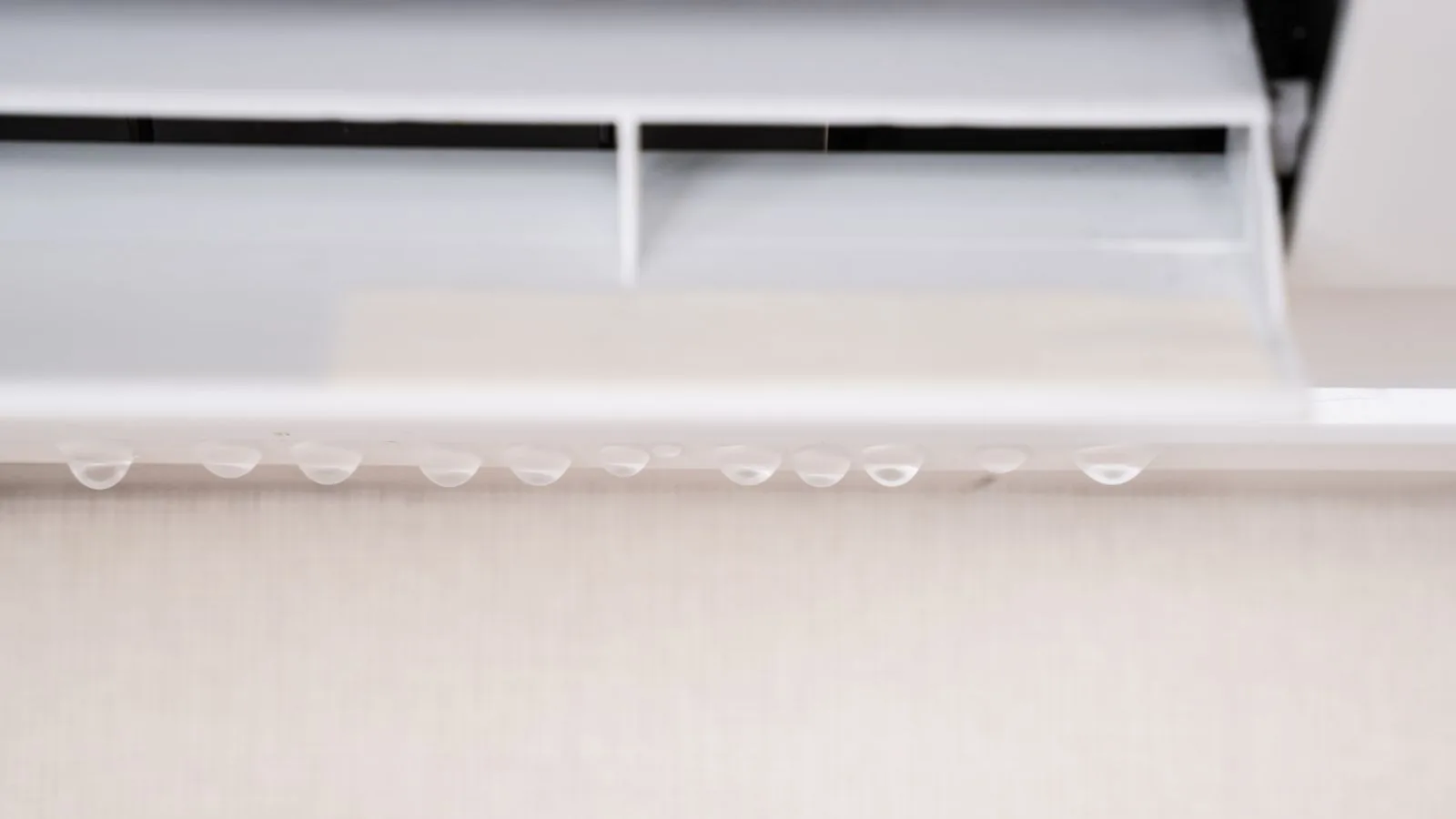
How an AC leak becomes water damage
Cooling coils collect condensation. A drain line carries that water outside or to a floor drain. If algae clogs the line, the pan under the coil overflows. Water spills onto insulation, ductwork or the framing below the air handler.
A frozen coil does a similar thing in reverse. Ice builds on the coil, then thaws and drips faster than the pan can handle. The result in either case is clean water in an unexpected place, usually where the air handler sits in an attic, a closet or above a finished ceiling.
What we handle and what we do not
We handle the water damage that follows an AC leak. HVAC repair belongs to an HVAC contractor. A technician clears the drain, replaces a pan or fixes the system. Once the system is off and the leak is controlled, our work is removal, cleanup and drying.
Water still spreading?
The dispatch line answers 24 hours a day. Call and describe what you see.
Signs of a hidden AC leak
Look for these clues if you suspect water from a unit.
- A damp spot or stain on a ceiling near the air handler.
- Water in the drain pan or on the floor beside a closet unit.
- A musty smell when the system runs.
- Ice on the coil or refrigerant lines.
- Rust at the base of the unit or on nearby metal.
What to do before help arrives
- Step 1
Turn off the system
Switch the thermostat to off. Running the unit while water is overflowing adds more water.
- Step 2
Cut power to the unit if the area is dry
Use the service switch or the breaker only if the area is dry.
- Step 3
Contain the water
Use towels and a wet vacuum on visible puddles.
- Step 4
Call for extraction and drying
The dispatcher will ask where the unit is and what the water has reached.
Drying an attic or a ceiling after an AC leak
Insulation under an air handler soaks quickly and stays wet. Wet attic insulation does not dry well in place, so it is often removed in the affected area. The framing below dries with air movers and dehumidifiers.
The ceiling underneath is checked with a moisture meter. Sections that are soft or stained are removed so the cavity can dry. For the ceiling repair itself, see ceiling water damage repair. For general equipment and monitoring practice, see structural drying.
Standards and sources
Water removal and drying on this page follow ANSI/IICRC S500. Condensate and air handler repairs are HVAC work and follow the manufacturer’s instructions and local code.
Why attic leaks are easy to miss
An air handler in an attic sits above the ceiling, and few people go up there. A clogged drain can drip for weeks before a stain appears below. By then the insulation is soaked, the ceiling drywall is stained and the framing has been wet for a long time.
Ask your HVAC contractor whether the system has a secondary pan or a float switch that shuts the unit off when water rises. That is an HVAC repair, so we only mention it here. Our part is to dry what the water reached.
Cost factors for AC leak cleanup
The price depends on:
- The size of the wet area.
- The amount of insulation removed.
- The condition of the ceiling below.
- Access to the attic or closet.
- Days of drying.
Scope and price are explained before work starts. AC leaks are often slow, so ask your insurer how it treats gradual damage.
Common questions
Why is my AC dripping inside?
A clogged condensate drain or a frozen coil are common causes. Turn off the system and have an HVAC contractor look at it.
Can an AC leak cause mold?
Damp insulation and framing can support mold growth if left wet, which is why the area should be dried promptly.
Do you fix the AC?
No. An HVAC contractor repairs the system. We handle the water damage and drying.
Is AC leak damage covered by insurance?
It depends on the policy and on whether the leak was sudden or gradual. Ask your insurer.
Call (833) 521-1033 if your AC has leaked into a ceiling or closet. For a leak from a plumbing line above, see burst pipe water damage. For standing water after the unit overflowed, see water extraction.