

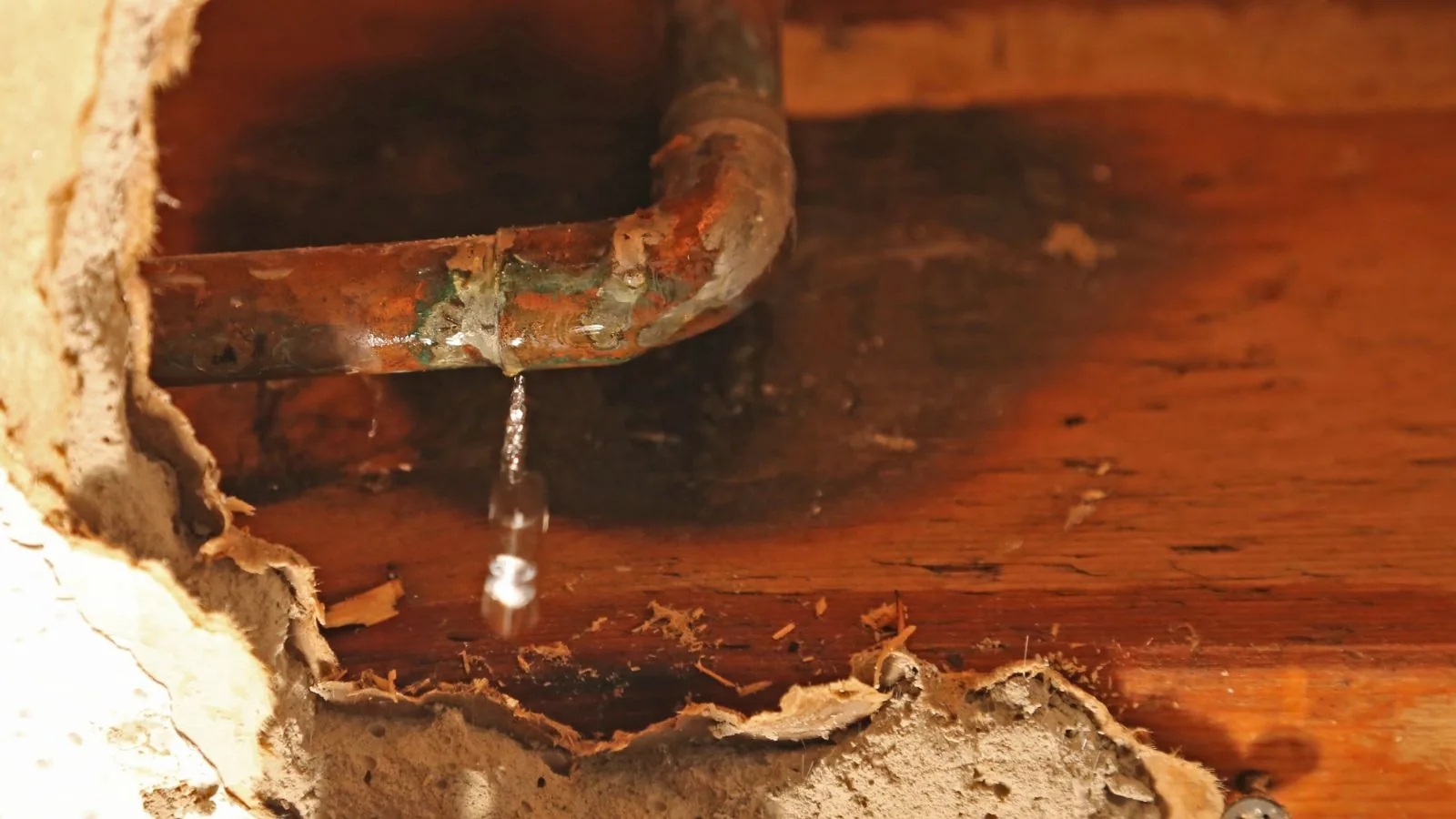
Why a burst pipe is different from other leaks
A burst pipe is a supply line under household pressure. Typical residential pressure pushes water through a split in a pipe far faster than a slow drip from a fixture. A small split can release a large volume in a short time, and the stream can be inside a wall where nobody sees it.
The page you are reading is about the water that burst pipes leave behind. Repairing the pipe itself is a plumber’s job. Our work starts once the water is stopped and covers removal, cleanup and drying of the structure.
When a burst pipe is an emergency
A split supply line can send a large volume of water through walls and ceilings in a short time. If water is coming through a ceiling, running down a wall or dripping from a light fixture, treat it as urgent and call at once, whatever the hour.
If water reaches a light fixture, outlet or panel, do not touch them. Call 911 or your electric utility first, since electricity and water together are dangerous. Switch off the breaker only if the panel is dry and reachable.
Water still spreading?
The dispatch line answers 24 hours a day. Call and describe what you see.
Stop the water first
Before any cleanup begins the supply has to be closed. Most Beaverton homes have a main shut-off where the water line enters the house, often near the water meter box at the street or at a utility wall in the garage or basement.
- Step 1
Close the main valve
Turn the valve clockwise until it stops. Ball valves close with a quarter turn of the handle.
- Step 2
Open a low faucet
Open the cold tap on the bottom floor of the house to drain the remaining line pressure and reduce further flow.
- Step 3
Cut power if water reached outlets
If water is dripping from light fixtures or reaching outlets, switch off power at the panel only if the panel is dry.
- Step 4
Call and document
Call the dispatch line. While you wait, take photos of the water source and the damage.
Where the water usually goes
Pressurized water follows gravity and framing. A burst in an upstairs wall can run down inside the cavity, soak the insulation, and exit at the ceiling below as a stain or a bulge in the drywall. A burst in the basement ceiling can drop water into finished rooms below it.
Because the water travels inside hidden spaces, a dry-looking wall is not proof that the wall is dry. Moisture meters and a thermal camera check cavities without cutting into the finish. Where readings show water, small inspection openings are cut so the cavity can be dried correctly.
What the cleanup involves
A burst pipe loss follows a consistent order of work. The steps below match the structure used in ANSI/IICRC S500 water damage guidance.
| Stage | What happens | Why it matters |
|---|---|---|
| Extraction | Pumps and extractors remove standing water from floors | Cuts the amount of water that drying equipment must evaporate. |
| Moisture mapping | Meters and thermal imaging locate wet materials | Shows hidden wet areas inside walls and under floors. |
| Removal of unsalvageable material | Saturated insulation, pad and soft drywall are removed if needed | Stops moisture from staying trapped in materials that cannot dry in place. |
| Drying | Air movers and dehumidifiers run for several days | Brings materials back to a dry standard. |
| Monitoring | Readings are taken at each visit until dry targets are met | Confirms the structure is dry before equipment is removed. |
Insurance and burst pipes
Sudden pipe failure is a common covered cause of loss on homeowner policies, though terms vary. The Oregon Division of Financial Regulation advises policyholders to weigh a claim against their deductible, since a reported claim can affect premiums. Read your policy or call your insurer before you decide.
Whatever you decide, document the loss. Photograph the damaged area, save the broken pipe section if you can, and keep receipts for any emergency purchases. Do not make permanent repairs before the insurer has a chance to inspect, unless the repair is needed to prevent further damage.
Cost factors for burst pipe cleanup
Several facts set the scope of the work. Your dispatcher will ask about each.
- How long the pipe ran before the water was shut off.
- Which floors and rooms the water reached.
- Whether insulation, drywall or flooring must be removed.
- The number of days of drying equipment on site.
- Whether water reached finished basements or ceilings below.
Scope and price are explained before work starts. After cleanup, a plumber repairs the line and a contractor handles rebuild work such as new drywall and paint.
Common questions
Do you handle burst pipe emergencies at night or on weekends in Beaverton?
Yes. Burst pipes do not wait for business hours, and neither does the line. Call overnight or on a weekend, close the main valve and tell the dispatcher where the water is going.
How much water can a burst pipe release?
It depends on pipe size and household pressure, but a split supply line can release a large volume in a short time. That is why shutting off the main valve is the first step.
Is a burst pipe covered by insurance?
Sudden pipe failure is often covered, but policies differ. Check your policy and ask your insurer, and weigh the claim against your deductible.
Can walls dry on their own after a pipe bursts?
Rarely. Wall cavities hold moisture and have little airflow. Without equipment, insulation and framing stay wet and the problem can continue.
Do you fix the pipe?
No. A licensed plumber repairs the line. Our work is the water removal, cleanup and drying that follows.
If a pipe has burst in your Beaverton home, call (833) 521-1033 after you close the main valve. For older neighborhoods near downtown Beaverton, see our page for Central Beaverton. If the same winter event has frozen other lines, read about frozen pipe water damage.