

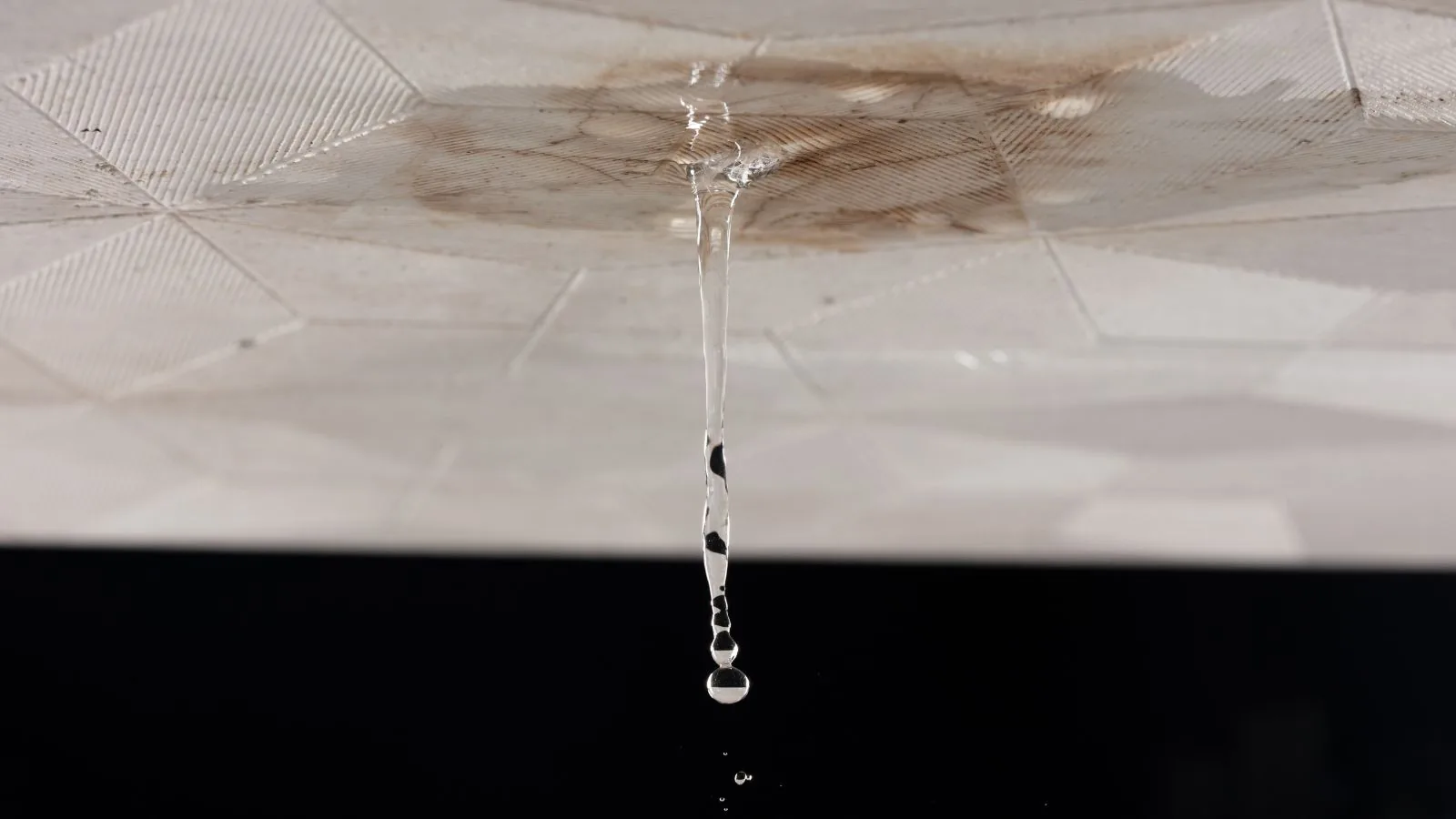
What a ceiling stain tells you
Brown rings on a ceiling mean water has soaked through the drywall, dried at the edge and soaked again. A bulge means water is pooled behind the surface. A sag means the drywall has absorbed enough water to lose its strength and could fall.
The visible damage almost always understates what is above. Insulation in the joist bays acts like a sponge and holds water against the back of the drywall long after the source has slowed. Treat any ceiling stain as a sign that a wet area exists that you cannot see.
When a wet ceiling is an emergency
A ceiling that bulges, sags, drips steadily or has a growing stain is holding water. The weight can bring it down. Call right away, including late at night during a storm, and stay out from under it.
If water is coming through a light fixture or a smoke detector, do not touch it. Call 911 or your electric utility before you call us. Switch off power at the panel only if the panel is dry and you can reach it safely.
Water still spreading?
The dispatch line answers 24 hours a day. Call and describe what you see.
Where the water comes from
This page owns ceiling damage whatever the source, because the repair question is the same. The sources fall into a few groups.
Roof leaks
Rain enters through worn flashing, damaged shingles or a failed vent seal and travels along the decking to the ceiling.
Plumbing above
An upstairs bathroom, a supply line or a drain leaks through the floor system into the ceiling below.
HVAC in the attic
Condensate from an air handler or ductwork drips onto insulation and works its way down.
Roof leak water in the ceiling
This area gets a long wet season. Rain on a worn roof does not always produce an immediate drip. Water can run along the decking and rafters, soak into insulation and appear in a ceiling several feet from the actual roof opening.
Our work on a roof leak loss is the water damage, not the roof. We locate the wet insulation, open the ceiling where needed, dry the cavity and document the damage. A roofer repairs the roof itself. Tell your roofer and your insurer that the ceiling was wet so that both repairs are coordinated.
Storm winds can also lift shingles and drive rain under them. See storm water damage cleanup for damage that comes through the whole building envelope during a weather event.
Safety before repair
A wet ceiling can fail without warning. These precautions protect people and belongings.
- Step 1
Clear the room below
Move people, pets and furniture out from under bulges and sagging areas.
- Step 2
Catch the drip
Place a bucket under active drips and move valuables aside. Cover large items with plastic.
- Step 3
Relieve pooled water
A small hole at the bottom of a bulge, made with a screwdriver, can let trapped water drain into a container. Stand to the side and wear eye protection.
- Step 4
Photograph and call
Take photos before anything is touched. Then call the dispatch line.
How the ceiling is dried and prepared for repair
The crew finds every wet section with moisture meters and a thermal camera. Saturated drywall and insulation that cannot dry in place are removed. The opened cavity is dried with air movers and dehumidifiers.
Once readings reach the dry standard, the area is ready for new insulation and drywall. A general contractor or drywall finisher handles the rebuild. Our records of moisture readings help that contractor and your insurer see that the area was dried first.
Cost factors for ceiling water damage
Price follows the size and depth of the loss.
- The area of ceiling affected and whether it has already sagged.
- How much insulation is wet.
- Whether the source is still active.
- Access from an attic or an upstairs floor.
- The number of drying days.
Scope and price are explained before work starts. If the source is a supply line, see burst pipe water damage.
Common questions
Do you handle ceiling water damage emergencies at night or on weekends in Beaverton?
Yes. Roof leaks show up during storms, and storms do not keep office hours. The line answers at night and on weekends. Describe the stain and where it sits.
Is a brown ceiling stain dangerous?
It means water has been present. The stain itself is not the main risk. The wet insulation and drywall behind it can sag or grow mold if left.
Should I poke a hole in a bulging ceiling?
A small hole can drain pooled water safely and prevent a larger collapse. Stand to the side, protect your eyes and place a container underneath.
Do you repair the roof?
No. A roofer repairs the roof. We handle the water damage inside, including drying and removal of wet materials.
Can I paint over the stain?
Not until the cavity is dry. Paint hides the stain but traps moisture and the stain often returns.
Call (833) 521-1033 if you see a new ceiling stain. The dispatcher will ask where the stain is, how large it is and whether the water is still dripping. Related pages include wall and drywall water damage and structural drying.