

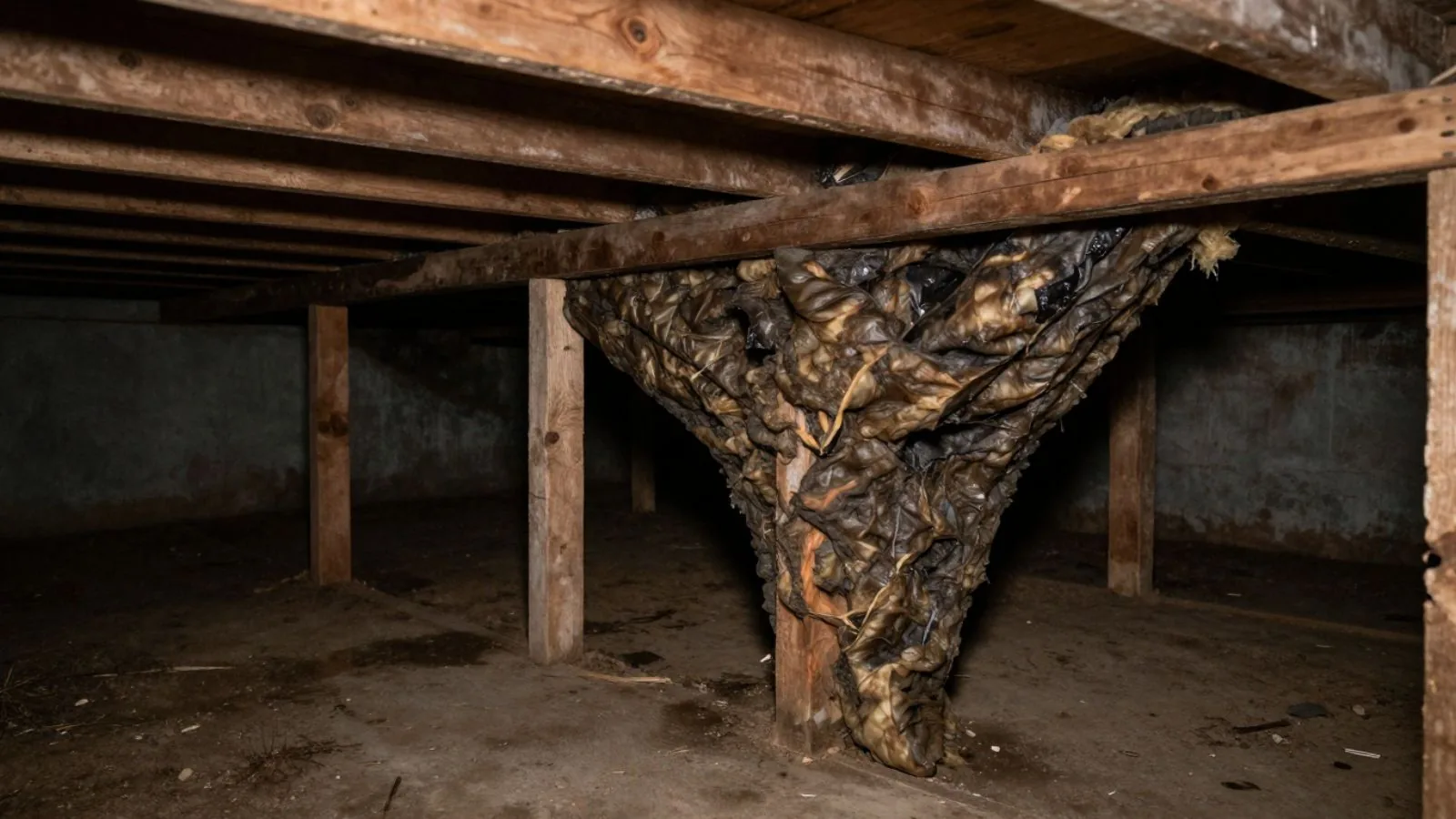
Why crawl spaces collect water
A crawl space is a shallow void between the soil and the first floor. Water gets in through plumbing leaks above, failed drain lines, rain that runs along the foundation and wet soil that releases vapor all year.
The Beaverton area has a long wet season. The National Weather Service records about 37 inches of rain at Portland airport in a typical year. Homes with crawl spaces sit over that moisture, and the space under them relies on ventilation or a vapor barrier to stay dry.
What water does to a crawl space
Several components are affected when a crawl space gets wet.
Insulation
Batts hung under the floor absorb water, slump and lose their value. They often have to be removed.
Vapor barrier
The plastic sheet over the soil can be torn, pushed aside or pooled with water on top of it.
Framing and subfloor
Joists and the underside of the floor stay damp and can swell, stain or soften if the moisture continues.
Water still spreading?
The dispatch line answers 24 hours a day. Call and describe what you see.
Safety in the crawl space
A wet crawl space is a hazard. Wiring, ductwork and plumbing run through it, and the space is cramped. Do not enter standing water near wiring. Wear gloves, a mask and boots if you must look inside, and use a flashlight rather than an extension cord.
If water has come from a sewer line, treat the space as contaminated. See sewage backup cleanup for what contaminated water requires.
How the space is dried
The steps follow the same logic as other water losses but with the limits of the space.
- Step 1
Find and stop the source
A leaking supply line is shut off. A drain or sewer line leak is confirmed by a plumber.
- Step 2
Remove standing water
Small pumps and wet vacuums clear pooled water from the soil surface.
- Step 3
Remove wet insulation
Saturated insulation is cut away and bagged. It cannot dry properly while hanging under a floor.
- Step 4
Dry the framing and the air
Air movers and dehumidifiers run until joists and subfloor reach their dry standard.
- Step 5
Check the floor above
Rooms above are checked for moisture in flooring and baseboards.
What the floor above is telling you
Water under the house shows up in the rooms above. Floors can feel soft or cold. Hardwood can cup. Doors can stick as framing swells. A musty smell inside the house can come from the crawl space through gaps around pipes and ducts.
These signs mean the moisture is not limited to the crawl space. Moisture readings at the floor and wall base will show whether the damage has traveled upward. For wood flooring, see hardwood floor water damage repair.
Vents and vapor control
Crawl spaces are managed in two common ways. Some are vented to the outside, and some are sealed with a vapor barrier over the soil. Which one you have affects how fast the space dries after a leak. Ask a contractor about the setup in your home, and tell the dispatcher what you know.
Cost factors for crawl space cleanup
The price depends on:
- The size of the crawl space and the depth of water.
- How much insulation is wet.
- Access, since low clearance slows the work.
- The water source and category.
- Days of drying.
Scope and price are explained before work starts. Waterproofing and grading are separate contractor work.
Common questions
Is standing water in a crawl space dangerous?
It can be, because of wiring, ducts and contamination. Stay out if you are unsure and call for help.
Does wet insulation have to be removed?
Usually. Batts under a floor cannot dry while attached, and they hold water against the framing.
Can the crawl space affect indoor air?
Yes. Air moves from the crawl space into living areas through gaps. Dampness and musty odors can travel up.
Do you install waterproofing?
No. We handle cleanup and drying. Waterproofing is a separate contractor trade.
Call (833) 521-1033 for water in a crawl space. For losses that started above and flowed down, see burst pipe water damage and appliance leak water damage. In older housing near downtown, see Central Beaverton.