

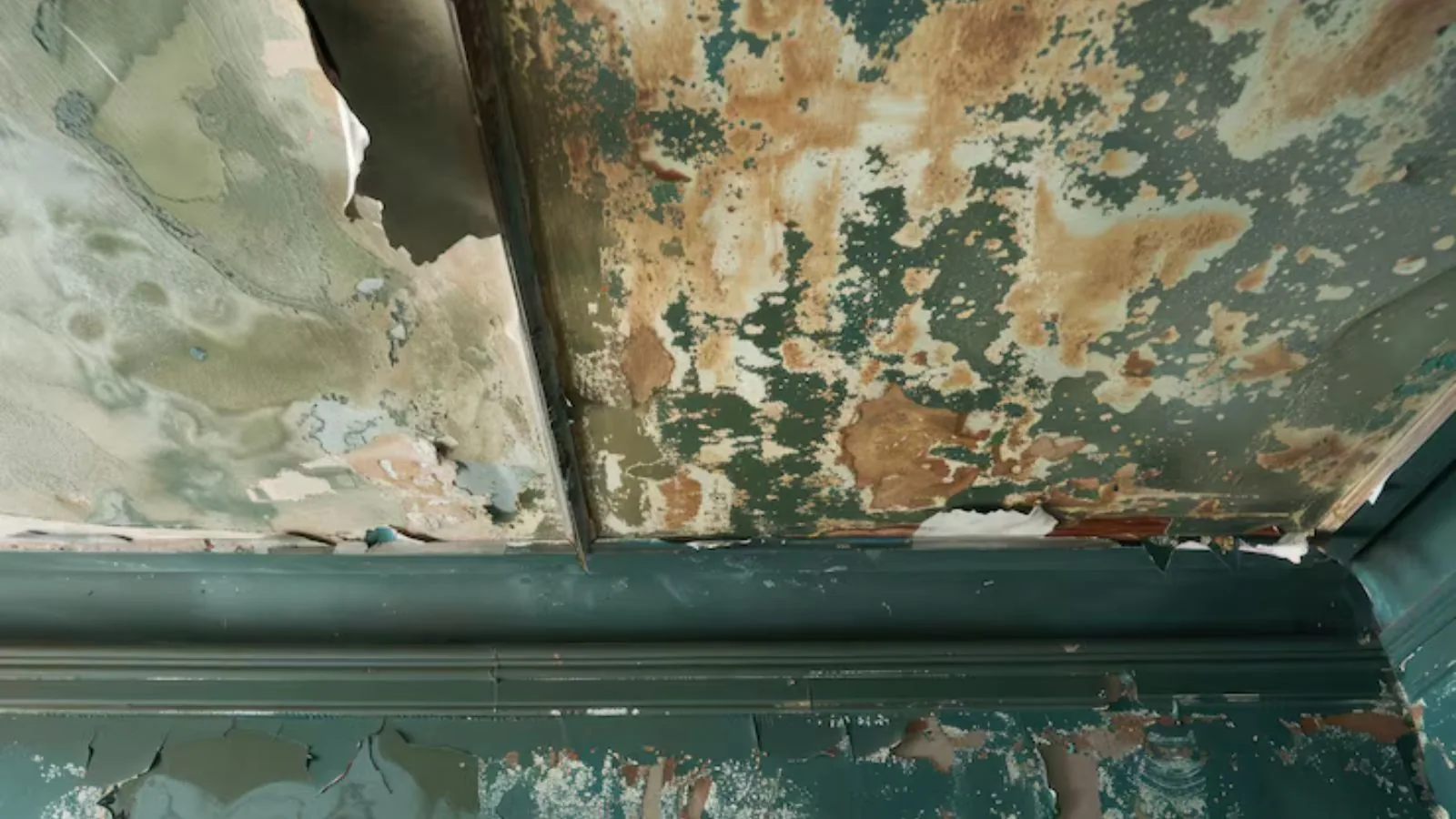
How drywall takes up water
Drywall is gypsum between paper facings. Water soaks into the paper and the gypsum. Wet drywall loses its strength, and the paper surface can bubble or peel. Water also moves upward through the wall by capillary action, which is why a wall can be wet well above the visible water line.
The wall also contains insulation and framing. Insulation holds water against the back of the drywall. Framing absorbs water more slowly but can stay wet for a long time.
Signs that a wall is wet
Look for these clues on interior walls.
- Paint that bubbles, flakes or looks stained.
- Baseboards that swell or pull away from the wall.
- Drywall that is soft when pressed.
- A musty smell near the wall.
- Wallpaper seams that lift.
- A cool or clammy surface compared with nearby walls.
Water still spreading?
The dispatch line answers 24 hours a day. Call and describe what you see.
Dry in place or open the wall
The decision depends on the water category, the time wet and the material.
| Condition | Typical approach | Why |
|---|---|---|
| Clean water, caught quickly | Dry in place | Small holes and air movers can dry the cavity. |
| Soft or crumbling drywall | Remove the section | Drywall that has lost strength does not recover. |
| Wet insulation behind the wall | Open the lower wall | Insulation holds water and cannot dry in place. |
| Contaminated water | Remove affected drywall | Porous material cannot be cleaned. |
The flood cut
After water has risen in a wall, the crew may cut the drywall a few inches above the highest wet reading. This is called a flood cut. It exposes the insulation and framing so they can be checked and dried. The wall is left open until readings reach dry targets, then a contractor installs new drywall.
Baseboards are removed first when possible. Removing them gives access to the bottom edge of the wall and lets them be reinstalled once dry.
Drying the cavity
Air movers push dry air through small openings, sometimes with specialized drying equipment that connects to the cavity. Dehumidifiers pull moisture from the room. Readings are taken daily at marked points.
The crew compares the readings with a dry reference from an unaffected wall. For process details see structural drying. For ceilings above the wall, see ceiling water damage repair.
Paint, mold and rebuilding
Do not paint until the wall is dry. Paint over a wet wall traps moisture and the stain returns. If mold has started on the wall surface, tell the dispatcher. A small amount of surface growth can be handled with the wall opened and dried, while larger growth needs separate evaluation.
Rebuild work such as drywall, taping and painting is done by a contractor after drying is verified.
Safety guidance for wet walls
A wet wall can hold wiring, switches and outlets. Do not touch them while the wall is damp. Do not drill or cut into a wet wall without turning off the circuit first. If a switch or outlet looks wet or scorched, call 911 or an electrician before you call us. Keep children away from soft drywall that could give way.
Insulation behind the drywall
Fiberglass insulation does not absorb water the way paper does, but it holds droplets against the back of the drywall and slows drying. Spray foam and rigid foam behave differently. Dense-pack cellulose absorbs water and stays wet a long time.
The crew identifies the insulation type when the wall is opened and chooses between drying in place and removal. Wet cellulose is usually removed. Fiberglass can often be dried in place when the cavity is ventilated.
Cost factors for wall water damage
Price depends on:
- The height and length of the wet wall.
- Whether insulation is wet.
- How much drywall is removed.
- Baseboard handling.
- Days of drying.
Scope and price are explained before work starts.
Common questions
Can wet drywall dry on its own?
Sometimes if it was only slightly damp and well ventilated. Walls with wet insulation usually need equipment.
What is a flood cut?
A cut a few inches above the water line so wet insulation and framing can be reached and dried.
How do I know the wall is dry?
Moisture meters read the wall and compare it with a dry reference. Touch is not reliable.
Do you repaint?
No. A painter or contractor does that after drying is confirmed.
Call (833) 521-1033 if a wall has been wet. For water from a kitchen sink, see kitchen water damage restoration. For walls near a leaking appliance, see appliance leak water damage.