

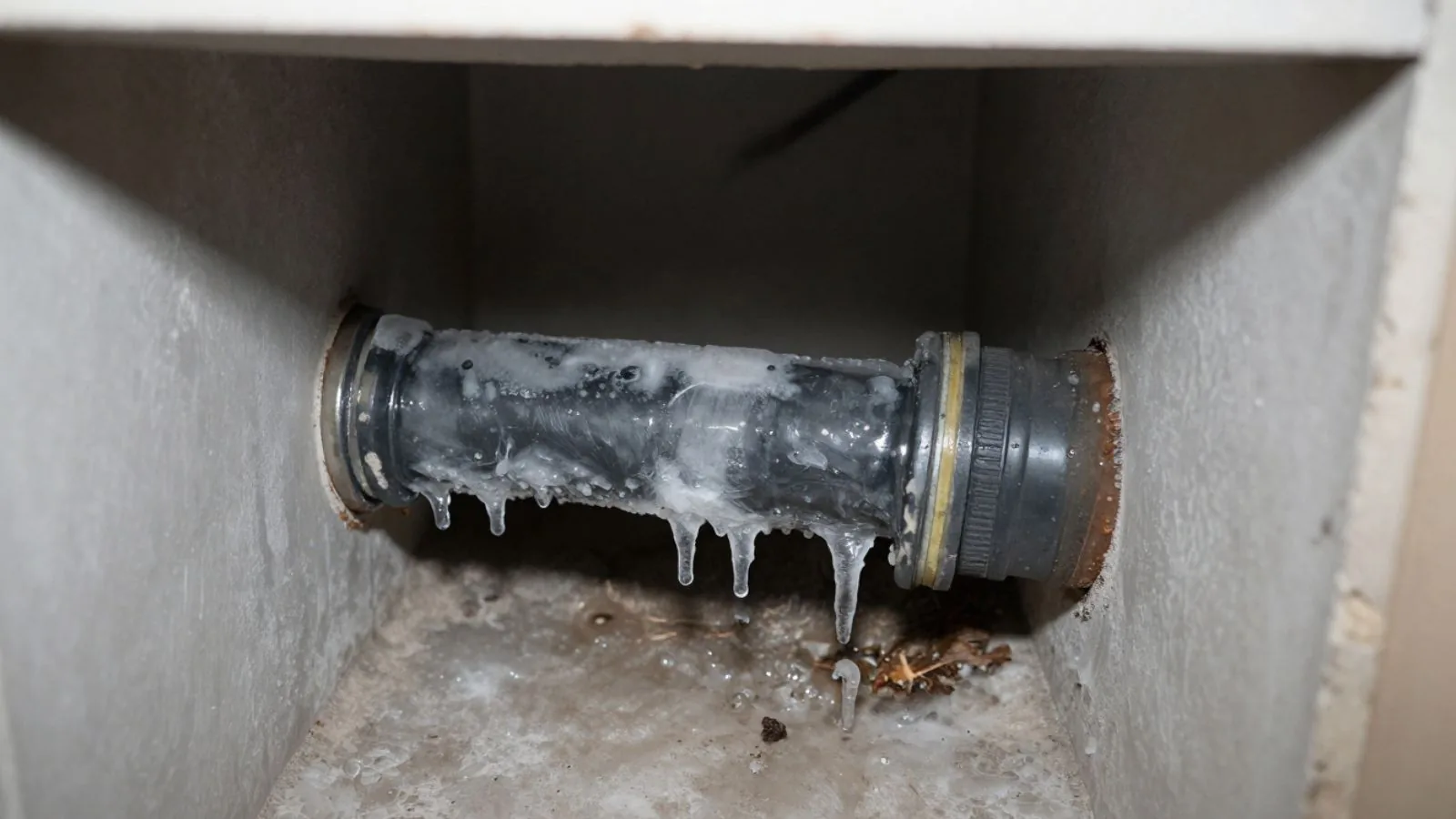
How a frozen pipe becomes a flood
Water expands as it freezes. A plug of ice inside a pipe builds pressure between the plug and the closed faucet, and that pressure splits the pipe wall. The split often does not leak while the ice holds. It leaks when the ice thaws and the water behind it starts moving again.
That delay is why many frozen pipe losses show up on a warmer afternoon, or when the heat is turned back up. Homeowners come home to wet ceilings or find water running down a wall that was dry that morning.
When a frozen pipe is an emergency
A frozen pipe that has not split is a warning. A pipe that is leaking or a ceiling that is dripping after a thaw is an emergency. Call right away, even on a holiday morning or in the middle of the night after a cold snap.
If a leak reaches a ceiling fixture or an outlet, stay clear and call 911 or your electric utility before you call us. Do not use an open flame or a heat gun on a frozen pipe. A hair dryer on low heat is the safer tool.
Water still spreading?
The dispatch line answers 24 hours a day. Call and describe what you see.
Cold weather in the Beaverton area
The Portland area is mild compared with much of the country, yet cold spells do happen. In January 2024 Washington County declared an emergency after ice, snow and wind storms that left tens of thousands without power. Cold homes and unheated crawl spaces are where pipes are most exposed during outages.
We do not claim that frozen pipes are a routine hazard in every neighborhood. They matter after specific cold events, and they matter most for pipes in exterior walls, attics, garages and crawl spaces.
What to do when you suspect a frozen pipe
Act before the thaw if you can. A pipe that has frozen but not yet split can sometimes be thawed safely.
- Step 1
Open the tap
If a faucet is not running, open it. Flowing water relieves pressure and helps ice melt.
- Step 2
Warm the area gently
Use a hair dryer on low or warm towels. Never use an open flame or a heat gun on a pipe.
- Step 3
Close the main if water appears
If you see a leak, shut off the main valve at once.
- Step 4
Call for removal and drying
Describe where the water is going, and a dispatcher will plan the cleanup with you.
Water in the attic and the walls
Frozen pipes in attics and exterior walls leak into insulation first. Wet insulation looks dry on top and holds water below. The ceiling below becomes the first sign, usually as a stain or a soft bulge.
The crew uses moisture meters and a thermal camera to trace the path from the ceiling stain back to the split. Where the ceiling is sagging, it may need to be opened to relieve trapped water. For the finished ceiling itself see ceiling water damage repair.
Drying in cold weather
Cold air holds little moisture and slows drying. A frozen pipe loss often happens in months when the house is closed up and humidity from drying has nowhere to go. Dehumidifiers are set to pull water out of the air rather than relying on open windows.
Equipment placement follows the moisture map. Air movers are aimed at wet wall bases and subfloor edges, and dehumidifiers run until readings reach the dry standard for the material. This is the same method described on our structural drying page.
Prevention without a plumber’s promise
A few habits lower the chance of a freeze loss. None of them is a sure protection.
- Know where your main shut-off valve is before winter starts.
- Keep the heat on and cabinet doors open under sinks on exterior walls during a hard freeze.
- Disconnect and drain outdoor hoses.
- Leave a faucet dripping slightly during a deep freeze if a plumber advises it.
- Ask a plumber about insulating pipes in the attic or crawl space.
Scope and price are explained before work starts. Insurance may cover freeze damage when a pipe bursts suddenly, but policy terms vary, so check yours.
Common questions
Do you handle frozen pipe emergencies at night or on weekends in Beaverton?
Yes. Cold snaps often hit at night and on weekends, and the line answers then. Close the main valve if a pipe has split and tell the dispatcher which floor is wet.
Will insurance cover a pipe that froze and split?
Oregon guidance notes that sudden freeze bursts may be covered, but terms vary. Read your policy and ask your insurer before you decide how to proceed.
Why did the leak start after the ice melted?
Ice inside the pipe often plugs the split. When it melts, water flows through the crack, so the leak shows up during the thaw.
Can I thaw a pipe myself?
A hair dryer on low heat is the safest home method. Never use flame. If you see water, shut off the main and call.
How long does drying take after a freeze loss?
A few days for most losses. The exact time depends on how many wall cavities and ceilings were wet and how cold the house is.
Call (833) 521-1033 if a frozen line has split in your home. The same crew handles standing water and drying, so there is one number for the whole loss. See also burst pipe cleanup for the supply line steps that apply during thaw.