

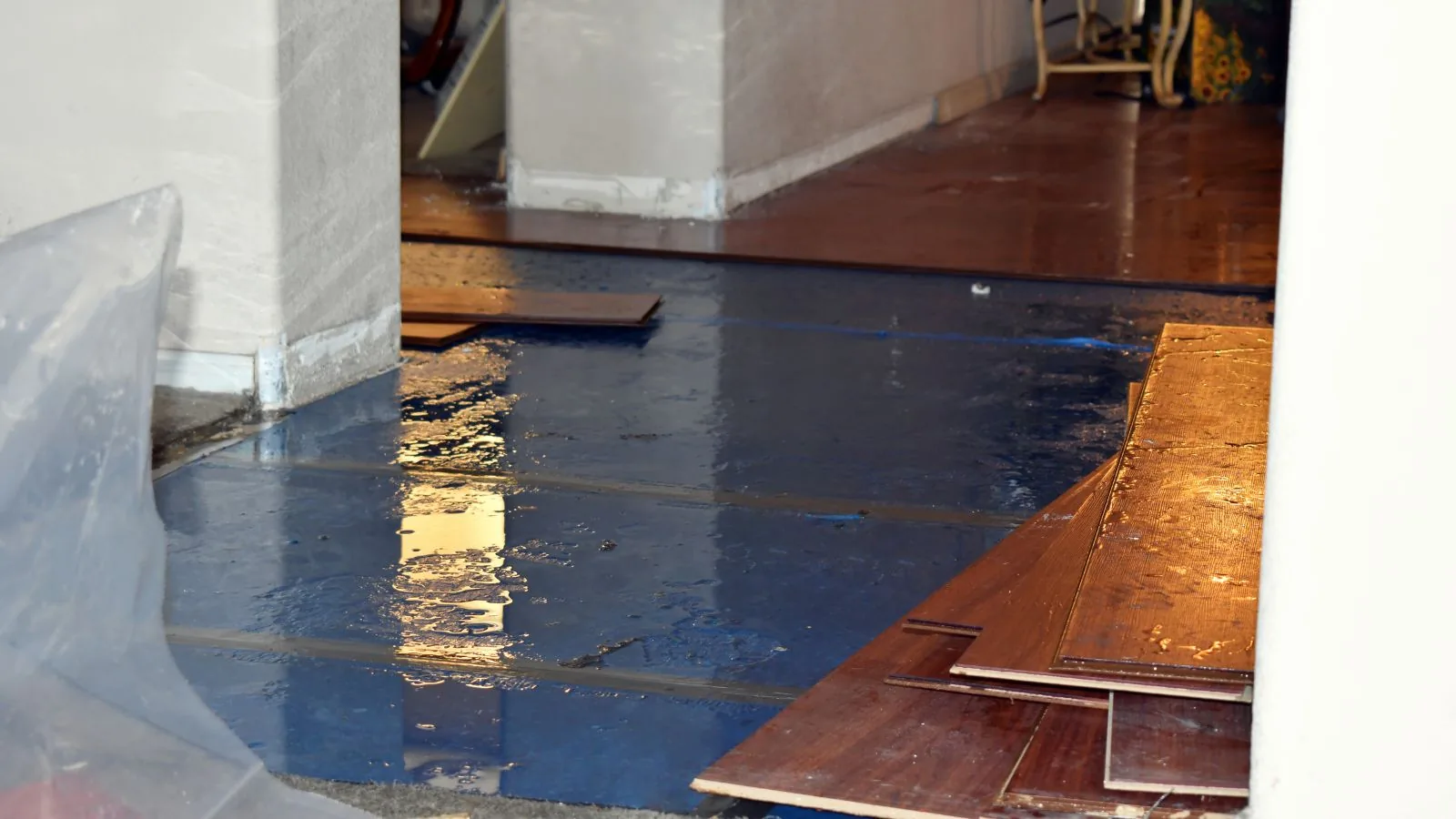
How storm water gets in
Storms test the building envelope. Wind pushes rain sideways into window frames, siding seams and vents. A limb strike can tear shingles or open a hole. Gutters overflow and pour water along the wall. Ice can block drains.
The water usually enters a few specific spots and then spreads inside walls and ceilings. Storm damage is separate from rising flood water. If water comes up from the ground, see flood damage cleanup.
When storm water is an emergency
Water running through a roof opening, around a window or down an interior wall needs attention while the storm is still on. Call during or right after the weather, at any hour, and describe where the water is coming in.
Stay away from downed power lines and call 911 or the electric utility. Do not go on a roof in wind or ice. If a limb has opened the roof, a temporary cover is best placed by a roofer when conditions allow.
Water still spreading?
The dispatch line answers 24 hours a day. Call and describe what you see.
Recent weather in Washington County
In January 2024 Washington County declared an emergency after ice, snow and wind storms. Nearly 100 trees came down in the county and tens of thousands of customers lost power. Falling limbs and ice-clogged drains are two ways that a winter storm can lead to water in the home.
The Portland area also has a long rainy season. Portland airport records about 37 inches of rain a year. Heavy rain and wind together are what strain roofs, flashing and gutters.
Safety after a storm
Check the hazards before you start cleanup.
- Step 1
Look for electrical hazards
Stay away from downed lines. Do not touch wet fixtures or outlets.
- Step 2
Protect the opening
If you can do it safely, cover a roof or window opening with a tarp.
- Step 3
Move belongings
Shift furniture and valuables away from leaks and cover them.
- Step 4
Photograph the damage
Take pictures of the opening and the wet areas before removal.
- Step 5
Call
The dispatcher plans extraction and drying with you.
Water behind finished surfaces
Storm water often runs behind siding and into wall cavities where you cannot see it. A damp spot on the inside of a wall can be the end of a path that started at a window corner. Moisture meters and a thermal camera show the extent without opening every surface.
Where readings are high, small openings are cut so insulation and framing can be dried. The method is described under structural drying.
Insurance and storms
Wind and rain damage is often covered under homeowner policies, but flood is usually not. Check your policy and ask your insurer what applies. The Oregon Division of Financial Regulation suggests documenting damage with photos, making only the repairs needed to prevent more damage, and keeping receipts. A tarp or board-up is the kind of temporary step an insurer expects.
Standards and sources
Water removal and drying on this page follow ANSI/IICRC S500. The January 2024 emergency declaration comes from Washington County, and insurance remarks follow guidance from the Oregon Division of Financial Regulation.
Drains, window wells and downspouts
Storm water often enters at the places that are supposed to carry water away. A downspout that dumps beside the foundation, a window well that fills like a bucket and a yard drain clogged with leaves are three common routes.
Walk the outside of the house during a storm if it is safe to do so. Look for water pooling against walls and for gutters that overflow. Clear what you can, and tell the crew what you saw so they can track the path of the water inside.
Cost factors for storm water damage
The scope depends on:
- The size of the opening and how long it stayed open.
- The number of rooms reached.
- Whether insulation and drywall must be removed.
- Days of drying.
- Whether power loss left the house cold and humid.
Scope and price are explained before work starts. A roofer or tree service handles the roof and limb removal.
Common questions
Do you handle storm water damage emergencies at night or on weekends in Beaverton?
Yes. Storms arrive at night and on weekends, and the line answers then. Tell the dispatcher where water is entering and whether power is out.
Is storm water the same as flood water?
No. Storm water enters from above or through walls. Flood water comes up from the ground or a river. The two can need different handling.
Should I tarp the roof myself?
Only if you can do it safely. Roof work during a storm is dangerous. A temporary cover is a good step when it can be done without risk.
Will insurance cover storm damage?
Often for wind and rain, but flood is usually excluded. Check your policy.
Do you remove fallen trees?
No. A tree service or roofer handles that. We deal with the water damage inside.
Call (833) 521-1033 after a storm if water has entered your home. For burst lines after a freeze, see frozen pipe water damage. For a stained ceiling after heavy rain, see ceiling water damage repair.