

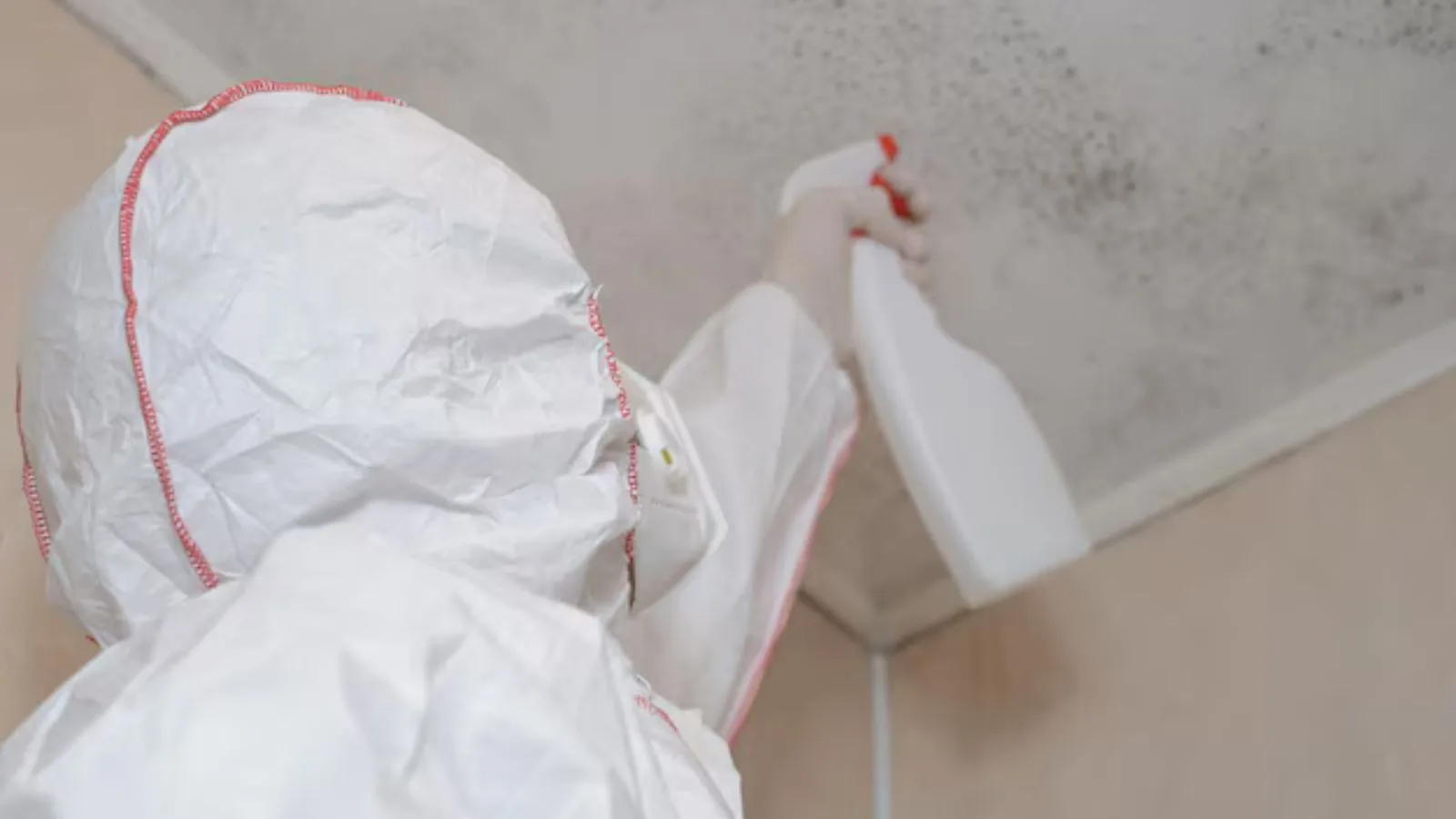
What causes a musty smell
The smell comes from microbes that grow on damp organic materials such as wood, paper, drywall paper, carpet pad and fabric. They give off gases as they feed. The odor tends to be strongest in closed rooms, closets and under flooring.
A smell can linger after the visible water is gone because the material underneath is still damp. A surface that feels dry can hold moisture within.
Find the source first
The smell moves, so follow it to its strongest point. Check these places.
- Carpet and the pad below, by lifting a corner.
- The base of walls and behind baseboards.
- Under sinks, behind appliances and around the water heater.
- Closets and cabinets against exterior walls.
- The crawl space or basement below the room.
Water still spreading?
The dispatch line answers 24 hours a day. Call and describe what you see.
Dry before you deodorize
Sprays and scented products cover odors but do not remove moisture. If the material stays damp the smell returns within days. Start by drying. Open windows only when the outdoor air is drier than the indoor air. In the wet season it often is not.
Run a dehumidifier in the room and use fans to move air. Remove soaked items that cannot be dried, such as carpet pad, wet cardboard and soft furnishings. Moisture readings show whether a material is truly dry.
Why damp odors are common in the wet season
Portland airport records about 37 inches of rain in a typical year, with most of it in the cool months. Outdoor humidity stays high from fall to spring. Closed homes hold that humidity, so a damp spot dries slowly without equipment.
Beaverton also has older homes and older commercial buildings, including the downtown historic district, where buildings date from 1887 to 1940. Older construction can hold moisture in places that are hard to see.
Clean what can be cleaned
Hard surfaces can be washed with detergent and water and then dried. Fabrics that can be laundered should be washed hot if the label allows. Porous materials that have been wet for days, such as carpet pad and soft drywall, are usually removed and replaced.
Wear gloves and a mask when you handle moldy or very damp material. Do not mix cleaning products. Bleach and ammonia produce dangerous gases.
Odors that point to different sources
The type of smell gives a clue about where to look.
| Smell | Likely source | Where to check |
|---|---|---|
| Earthy or musty | Damp wood, drywall paper or carpet pad | Wall bases, closets, under carpet. |
| Sour or rotten | Standing water, drain trap or wet organic matter | Drains, sump pits, under sinks. |
| Sewage-like | Dry trap or a sewer line problem | Floor drains, basement fixtures, a plumber. |
Why odors come back
If the smell fades and returns, moisture is still present, or a porous material is still holding odor. Common culprits are carpet pad that was never replaced, drywall that dried but kept stains and fabrics that were stored while damp.
Odor removal works when the moisture is gone and the source material is removed or cleaned. Ozone machines, fogging and fragrances can reduce odor for a time, but they do not fix the cause. Ask for readings, not promises.
Sources for this guide
Rainfall figures come from National Weather Service normals for Portland airport. Terms on moisture and drying follow the ANSI/IICRC S500 standard.
Simple steps for a closet or small room
For a small, contained space, try this order.
- Step 1
Empty the space
Remove everything and discard anything that is soaked or moldy.
- Step 2
Wipe hard surfaces
Use detergent and water. Dry with a clean cloth.
- Step 3
Run a dehumidifier
Close the door and let the unit run until the humidity stays low.
- Step 4
Check again in a week
If the smell returns, something is still wet behind the surface.
Protect your health while you work
Damp areas and old growth can irritate the lungs and eyes. Wear gloves, eye protection and a mask when you handle damp, smelly material. Keep windows cracked for fresh air while you clean, and wash your hands and clothes afterward.
If someone in the home has asthma or a weak immune system, ask them to stay out of the area until it is dry and clean. Ask your doctor if you have concerns about symptoms.
When the smell means a bigger problem
Call for help when the smell is strong, when it keeps coming back, when walls are stained or soft, or when someone in the home has breathing trouble. A moisture inspection finds the wet area without guessing.
If the cause is a recent leak, see water extraction for removal. If the smell follows a sewer or drain issue, see sewage backup cleanup. Crews also serve Hillsboro and Portland.
Common questions
Is a musty smell always mold?
Not always, but it points to moisture and microbial growth. The only way to know is to find the damp material.
Will an air purifier remove the smell?
It may reduce odor but does not remove the moisture source. Dry the area first.
How long does the smell last?
Until the damp material is dried or removed. Days to weeks depending on the source.
Can I open the windows to air it out in winter?
In the Beaverton wet season outdoor air is often damp too. A dehumidifier works better.