

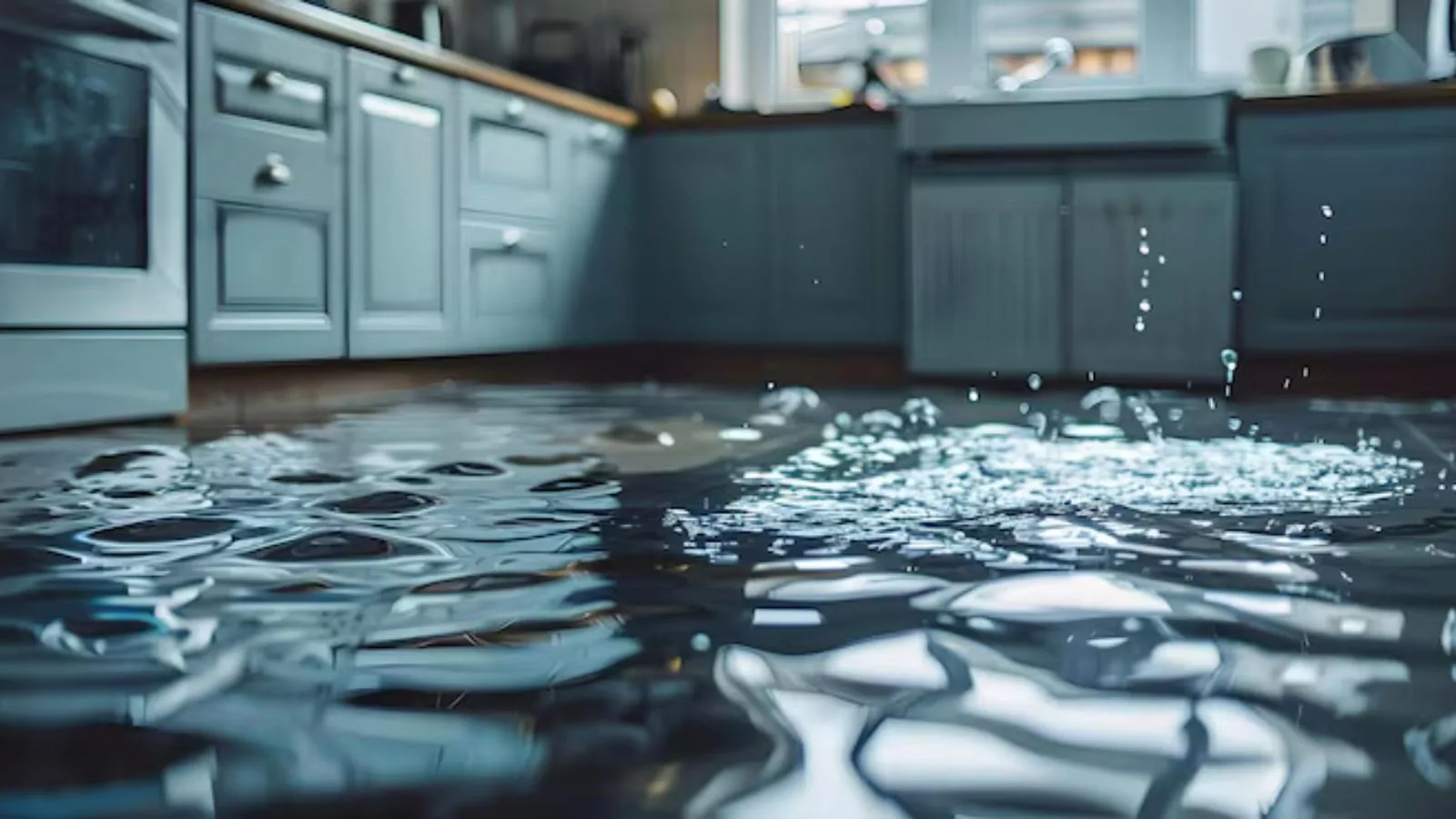
Signs that something is wrong
Watch for these clues.
- A water bill that rises with no change in use.
- The sound of running water when everything is off.
- Damp spots, stains or peeling paint on walls and ceilings.
- A musty smell in one room.
- Warm spots on a floor.
- Low water pressure that comes and goes.
The water meter test
Turn off every fixture and appliance that uses water. Find your water meter and look at the small dial or the leak indicator. If it moves with everything off, water is going somewhere. Note the reading, wait an hour without using water and read it again.
A change means a leak between the meter and the fixtures. It does not tell you where. It tells you to look.
Water still spreading?
The dispatch line answers 24 hours a day. Call and describe what you see.
Check the usual suspects
Many hidden leaks come from a few places.
Toilets
A running or leaking toilet flapper wastes water silently. Put a few drops of food coloring in the tank and see whether it appears in the bowl without flushing.
Under sinks
Slow drips from traps and supply lines are common. Feel the cabinet floor with a dry paper towel.
Appliances
Look behind washers, dishwashers and refrigerators for damp floors and stained hoses.
Who to ask about water use in Beaverton
City of Beaverton Water serves about 90,000 people according to the Environmental Protection Agency. The meter belongs to the utility. If your bill rises sharply, ask the utility how to read your meter and whether it can check for a leak. Leaks past the meter are your responsibility.
Older Beaverton homes and the older commercial buildings near downtown can have aging supply lines. We do not claim any local rate of leaks. Check the lines you can see and test the meter.
Use your senses and some tools
Listen at walls and floors with a quiet house. Hissing or dripping sounds can guide you. Look at the ceiling below upstairs bathrooms. Feel the baseboards for damp spots.
A moisture meter or a thermal camera makes the search much easier. They can read through surfaces. A restoration crew or a home inspector can bring them. For a leak that has already wet the structure, see water extraction.
A step-by-step leak hunt
Work from simple to complex.
- Step 1
Read the meter
Turn off all water use and record the meter reading. Wait an hour and read again.
- Step 2
Check toilets
Add food coloring to each tank. If color shows in the bowl without flushing, the flapper leaks.
- Step 3
Check fixtures and appliances
Look under sinks and behind machines for drips and damp spots.
- Step 4
Check outside
Look at hose bibs, irrigation lines and the area around the meter for wet ground.
- Step 5
Call for readings
A moisture meter and a thermal camera can locate water behind surfaces.
What not to do
Do not cut into walls to look for leaks. Cutting without a reading creates damage and rarely finds the source. Do not use chemical products to stop a leak. Do not ignore a small drip because it seems minor. It is the sign you are looking for.
Call a plumber for leaks you find and repair. If the leak has already wet the structure, call for removal and drying as well.
Reading your water bill for clues
Your bill shows usage for each period. Compare the last few months with the same months last year. A rise that you cannot explain by guests, irrigation or new habits is a clue. A steady overnight draw on the meter is a stronger one.
Ask your utility whether it can alert you to unusual use. Some utilities offer online tools that show daily usage. A pattern such as flow every hour of the night, with no one home, is a sign of a leak.
Leaks outside the house
A leak does not have to be inside the walls. A broken irrigation line, a cracked hose bib or a damaged service line between the meter and the house can waste water and soak the ground near the foundation. Look for a patch of lawn that stays green or soggy when the rest is dry, or a spot where water seems to bubble up.
A service line leak is the owner’s responsibility, and a plumber can locate it. Mark the wet spot and take a photo before you call.
When you find it
Close the valve for the fixture or the main. Take photos. Call a plumber to repair the leak. If water has reached walls, floors or ceilings, call for removal and drying so that it does not keep damaging materials.
If the leak is under a slab, see slab leak water damage. We also serve Hillsboro and Portland.
Common questions
How do I tell if the leak is inside a wall?
Stains, damp baseboards and a meter that moves with fixtures off all point that way. A moisture meter reads through the surface.
Can a leak raise my water bill?
Yes. A steady leak runs all day. Compare recent bills to past ones.
Is a hidden leak covered by insurance?
Sudden leaks are often covered. Long-term leaks often are not.
Should I cut into the wall?
Not before you have a reading. Cutting without a plan can create more damage.